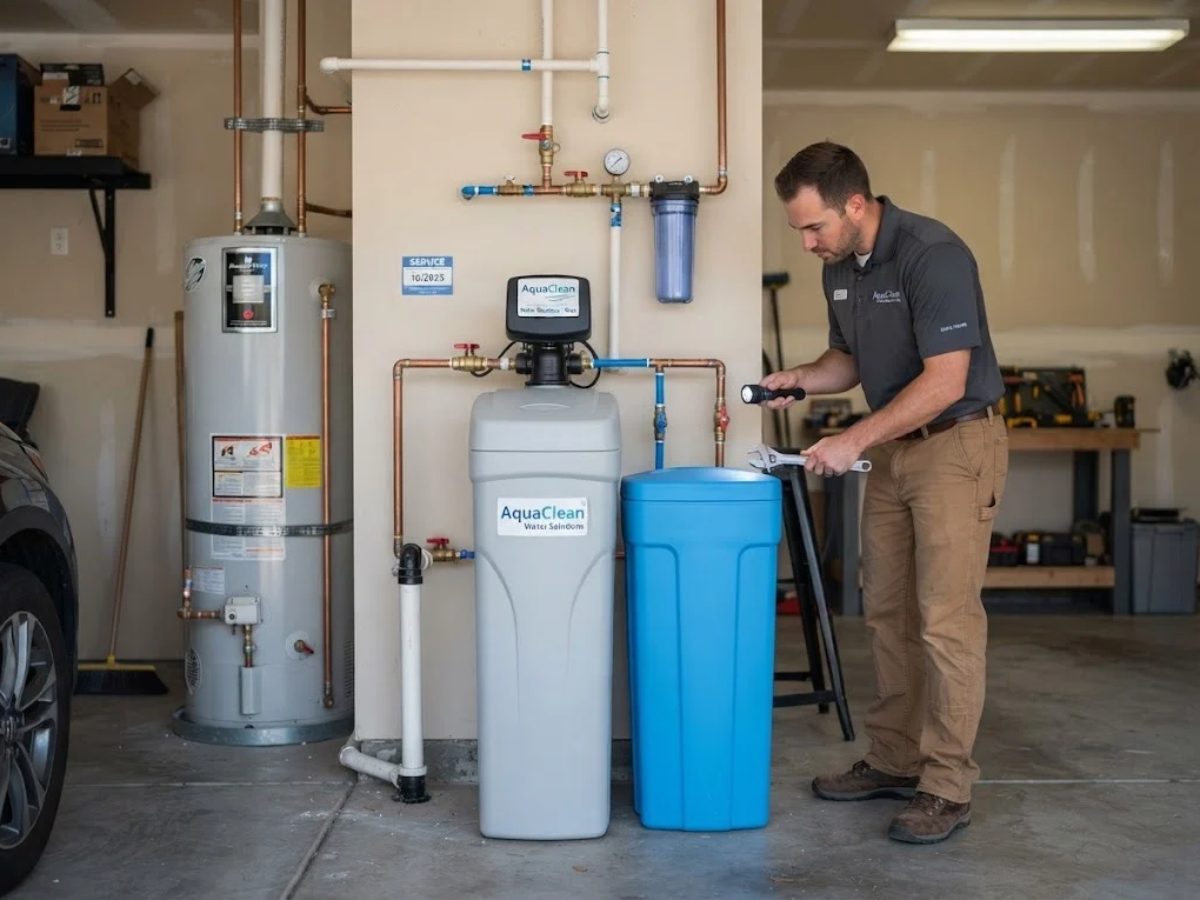
Hard water isn't dangerous to drink, but it has real, cumulative effects on plumbing fixtures, water heaters, and appliances that add up over years of exposure. Here's what's actually happening and what it costs you if left unaddressed. None of this is unique to Brea specifically, but it's worth understanding in the local context of North Orange County's water supply.
Where Brea's Water Comes From.
A City of Brea environmental document reports that about 99 percent of the City's water in fiscal year 2019-20 was imported groundwater from the Main San Gabriel Basin, delivered through Cal Domestic Water Company. The rest was a small share of other supply.
Groundwater can carry dissolved minerals, so the hardness of your own tap is worth measuring instead of guessing. Use a test strip, or ask City of Brea Utilities for its latest water quality report, before you size a softener.
Source: Supply mix per the Brea Mall Mixed Use Project Final EIR, Section 2.1.
What Hard Water Actually Is.
Hard water contains higher levels of dissolved minerals, primarily calcium and magnesium, than soft water. It's not a safety issue, but as hard water evaporates or heats, those minerals precipitate out and deposit as scale on any surface the water touches, faucets, showerheads, pipe interiors, and water heater elements.
The Visible Effects.
White, chalky buildup on faucets and showerheads is the most obvious sign. Soap that doesn't lather well and leaves a film, and spots on dishes after washing, are also common hard-water symptoms most homeowners have experienced without necessarily connecting to water hardness.
The Less Visible, More Expensive Effects.
Inside a water heater, mineral sediment settles at the bottom of the tank, reducing efficiency and shortening the unit's effective lifespan, this is a major reason water heaters in hard-water areas often need replacement sooner than the same unit would in a soft-water market. Inside pipes, scale buildup gradually narrows the interior diameter over years, contributing to reduced water pressure over time, similar to what aging galvanized pipe causes, but from a different mechanism.
What a Water Softener Actually Changes.
A properly sized water softener removes the minerals before they reach your fixtures, water heater, and pipes, addressing the cause rather than just the visible symptoms. It won't undo existing scale buildup, but it stops new buildup from accumulating, which extends the life of everything downstream.
Salt-Based vs. Salt-Free Softening.
Traditional salt-based softeners actually remove hardness minerals through an ion-exchange process and are the most effective option for genuinely hard water. Salt-free 'conditioners' alter mineral structure to reduce scale buildup without fully removing the minerals, a reasonable option for households wanting to avoid added sodium, though generally less effective for significantly hard water than a true softener.
Does Hard Water Affect Your Landscaping Too.
If you irrigate with the same hard water supply, mineral buildup can also affect sprinkler heads and drip irrigation emitters over time, similar to what happens inside household pipes. A whole-home softener addresses household plumbing. Irrigation-specific filtration is a separate consideration if you're seeing clogged emitters or heads.
How to Know If a Softener Is Actually Working.
After installation, you should notice softer-feeling water within days, less scale buildup on fixtures over the following weeks, and soap that lathers more easily. If none of that improvement shows up, the system may be undersized, improperly installed, or not regenerating correctly, worth flagging for a service check rather than assuming softening just doesn't work for your home.
Is Hard Water Worse in Some Parts of Brea Than Others.
Water hardness tends to be similar across a single supply system rather than varying block to block, so most Brea neighborhoods on the same supply should see similar readings. Test your own tap to confirm. What does vary is how much that hardness has already affected a specific home's fixtures and water heater, which depends more on the home's age and whether a softener has ever been installed than on location within the city.
Signs Hard Water Is Affecting Your Home.
- Visible white or chalky buildup on fixtures and showerheads.
- Soap and shampoo not lathering well.
- Spots or film on dishes after washing.
- A water heater that's needed repair or replacement sooner than expected.
- Gradually declining water pressure with no other clear cause.
- Consider testing your water's actual hardness level rather than assuming based on symptoms alone.
- Ask about pairing a softener with a filtration system if both hardness and taste are concerns.
- Ask about system capacity if your household size has grown since any prior softener was installed.
FAQs.
Hard water's damage happens slowly enough to ignore for years, which is exactly why it's worth addressing proactively rather than waiting for a water heater or fixture to fail. If you're noticing any of the signs above, a water hardness test during a service visit can confirm what you're actually dealing with.
It's a slow, quiet problem, which is exactly the kind worth addressing before it isn't quiet anymore. the effects are cumulative but very manageable with the right system. For more on this, see our Water Softener Installation & Repair and Water Filtration Installation pages. This comes up often for homeowners in Blackstone and Fullerton.
All repairs are performed to the standards of the California Plumbing Code (based on the Uniform Plumbing Code, UPC).