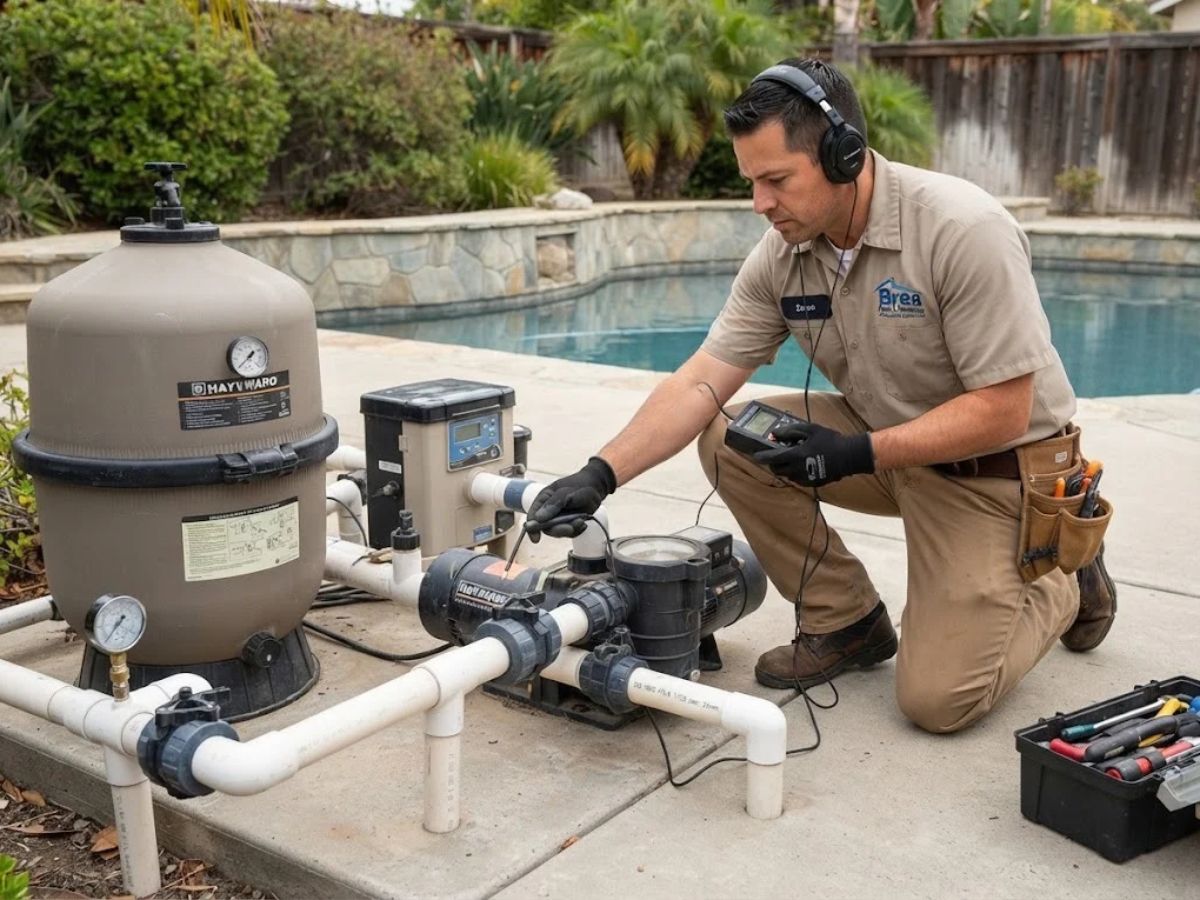
With Brea's pool-common neighborhoods like Olinda Village and the Brea Hills heading into another warm season, a quick plumbing check before you're running the pump daily can save real money and water. This applies whether you've owned the pool for years or are heading into your first season with a newly purchased home.
Brea Pool Owners: Water Supply And Digging Rules.
A City of Brea environmental document reports that Brea's tap water in fiscal year 2019-20 was almost all imported groundwater, so the water you top off with is the same water you test. Test your own tap before you assume what the pool chemistry needs.
If a buried pool line needs repair, California law requires an excavator to notify the regional notification center at least two working days, and not more than 14 calendar days, before digging. In Southern California that center is DigAlert, reached by dialing 811. The requirement does not apply in an emergency.
Source: Brea Mall Mixed Use Project Final EIR, Section 2.1, and California Government Code 4216.2.
Run the Bucket Test.
Before assuming any water loss is just evaporation, run a bucket test: mark the pool's water level, place a bucket of water on the pool steps at the same level, and compare loss after 24 hours. If the pool has lost noticeably more than the bucket, you likely have an actual leak rather than normal evaporation, which typically runs about a quarter inch per day.
Check the Equipment Pad.
Before starting up equipment that's been idle over cooler months, look for wet spots, staining, or mineral deposits around pump, filter, and heater connections. These are common early signs of a fitting leak, and catching one before full summer use starts is easier and cheaper than after months of daily operation.
Listen for Air in the System.
Air bubbles coming from return jets, or a pump that seems to be working harder than usual, can indicate a suction-side leak pulling air into the system. This is worth investigating before it causes pump damage from running dry or cavitating.
Don't Just Add Chemicals to Compensate.
If you're topping off water more than expected and adjusting chemical levels more frequently to compensate, that's treating a symptom rather than the cause. A genuine leak means you're also losing treated, balanced water, which costs more in chemicals over a season than fixing the actual leak would.
Don't Forget the Backflow Device.
If your pool or irrigation system shares a backflow prevention device, spring is also a reasonable time to confirm it's been tested within the past year, since it's easy to let that lapse over the off-season alongside general pool maintenance. See our guide on backflow testing requirements for the full picture on what's required and how often.
What If You're Opening a Pool That Sat Unused Over Winter.
A pool that's been idle for months deserves extra attention before daily summer use starts, equipment that hasn't run in a while is more likely to reveal a problem the first time it's turned back on. Running the bucket test and equipment pad check before your first full startup, rather than after, catches issues while they're still small.
What a Small Leak Costs Over a Season.
It's easy to dismiss a small, slow leak as not worth the trouble of investigating, but over a full pool season that daily water loss adds up in both replacement water and the chemicals needed to keep replacement water balanced. A leak that seems minor in April can represent a meaningful, avoidable cost by August if it's left unaddressed the whole season.
What Our Pool Leak Service Actually Checks.
When we're called for a suspected pool leak, we don't just look at the obvious spots, we systematically check the equipment pad, pressure-test the plumbing lines separately from the pool shell, and use the bucket-test comparison to confirm a leak exists before recommending any repair. This systematic approach avoids the common mistake of assuming the pool shell itself is leaking when the actual cause is almost always somewhere in the plumbing or equipment.
Pre-Season Pool Plumbing Check.
- Run a 24-hour bucket test to distinguish evaporation from an actual leak.
- Inspect the equipment pad for wet spots or mineral staining.
- Listen for unusual pump noise or check for air in the return lines.
- Note if chemical and water top-off frequency has increased compared to last season.
- Address any confirmed leak before daily summer use begins, not after.
- Note the date of your pre-season check so you have a reference point if an issue comes up later in the season.
- Check the pump lid and o-ring seal for wear, a common minor source of air intrusion.
- Keep a simple log of any top-offs needed through the season to spot a trend before it's obvious.
FAQs.
A pool leak caught in spring is a quick, inexpensive fix. The same leak ignored through a full summer of daily use costs considerably more in water, chemicals, and eventual repair. A 20-minute check now is a lot less hassle than an emergency call mid-summer when the pool's in daily use.
It's a small investment of time that protects a much bigger investment in the pool itself. For more on this, see our Backflow Testing & Prevention and Pool Leak Detection & Repair pages. This comes up often for homeowners in Yorba Linda and Brea Hills.
All repairs are performed to the standards of the California Plumbing Code (based on the Uniform Plumbing Code, UPC).